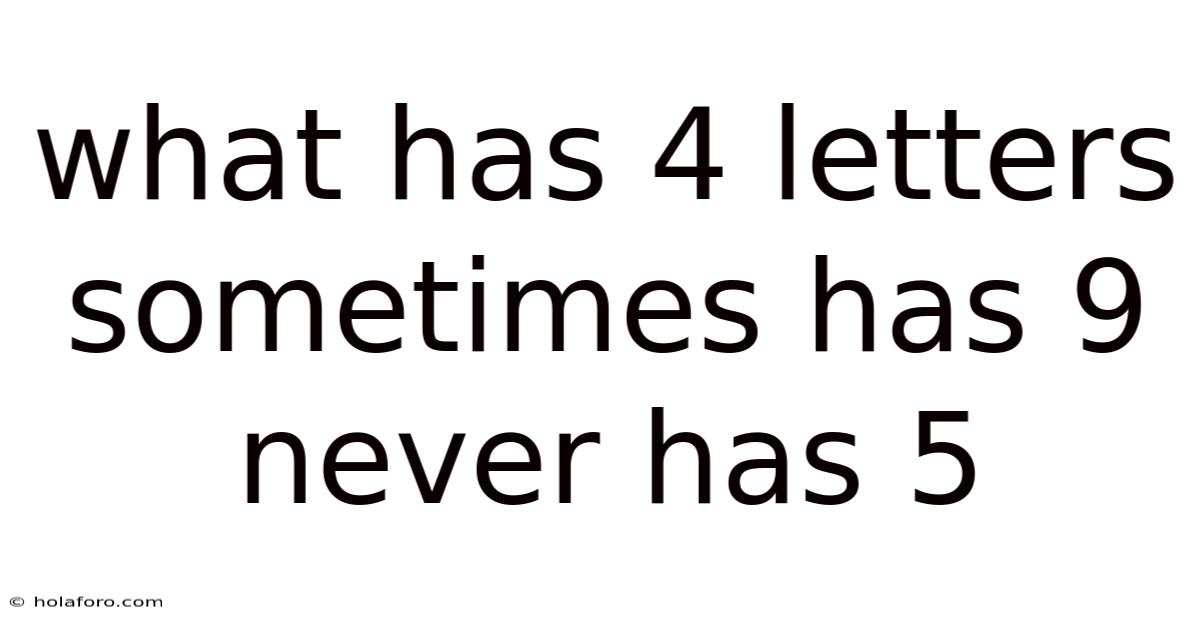
Understanding the intriguing phenomenon of words that appear with just four letters but carry a weight of nine can be a fascinating journey into the world of language and meaning. Day to day, " At first glance, it might seem like a mere four-letter word, yet it makes a real difference in conversations, adding nuance and clarity. Worth adding: this article looks at the mystery behind such terms, exploring their origins, usage, and significance in everyday communication. Think about it: for instance, consider the word "bout. Consider this: many people often encounter phrases that seem simple at first glance but hold a deeper complexity. This exploration will unravel the layers behind this intriguing linguistic pattern, helping you appreciate the beauty of language in its most compact forms That's the part that actually makes a difference..
When we look at the structure of words, it becomes apparent that some can be crafted with just four letters but carry a substantial impact. Take the example of "lude.Still, " This word, though simple, is essential in contexts where brevity meets precision. It is often used to convey a sense of action or a conclusion, making it a valuable tool in communication. Understanding these words enhances our vocabulary and enriches our ability to express thoughts succinctly.
Not obvious, but once you see it — you'll see it everywhere It's one of those things that adds up..
The challenge lies in recognizing these terms quickly, especially in fast-paced environments where clarity is key. Practically speaking, by learning to identify words that fit this pattern, you not only improve your language skills but also boost your confidence in everyday interactions. This article will guide you through the process of discovering these four-letter gems, making you more adept at recognizing their significance.
In the following sections, we will break down the steps to identify such words, explore their origins, and discuss their importance in various contexts. That said, by the end of this exploration, you will have a clearer understanding of how these compact words shape our conversations and written communication. The goal is to empower you with knowledge that enhances your linguistic prowess, ensuring you can deal with the nuances of language with ease and confidence Small thing, real impact..
As we dive deeper into the topic, we will also address common questions that arise when encountering these intriguing terms. By the time we reach the conclusion, you will have a well-rounded perspective on the role these words play in our daily lives. This practical guide aims to provide not just information but also a deeper appreciation for the art of language, making it a valuable resource for anyone looking to refine their communication skills.
Understanding the significance of words that fit this unique pattern is essential for anyone seeking to enhance their language capabilities. These four-letter words are not just simple constructs; they are vital components of effective communication. By recognizing their presence in various contexts, you can better grasp the nuances of language and improve your ability to convey ideas clearly. This exploration will serve as a foundation for building a stronger connection with others through thoughtful and precise expression Surprisingly effective..
The short version: the quest to uncover the meaning behind words that are just four letters long but carry a nine-letter impact is both challenging and rewarding. Consider this: this journey will equip you with the tools necessary to deal with conversations with confidence, making your communication more impactful and engaging. On top of that, by engaging with this topic, you will not only expand your vocabulary but also develop a greater appreciation for the intricacies of language. As we continue to explore this fascinating subject, let’s uncover the secrets behind these compact yet powerful words Not complicated — just consistent..
The importance of recognizing these four-letter words cannot be overstated. So naturally, in a world where communication is key, being able to identify and use such terms effectively can elevate your interactions. Now, this skill is particularly useful in professional settings, where clarity and precision are essential. By mastering these words, you enhance your ability to connect with others, ensuring your messages resonate more deeply. Understanding their significance also helps in avoiding misunderstandings, making your communication more effective and impactful.
To begin with, let’s examine the origins of these intriguing words. The study of language reveals that many four-letter words have deeper meanings or connections to other terms. Take this: the word "bout" is closely related to "bout a," which often refers to a discussion or a suggestion. That's why this connection highlights how seemingly simple words can carry substantial weight in conversation. By tracing their roots, you gain insight into the rich tapestry of language that shapes our interactions And that's really what it comes down to..
Most guides skip this. Don't It's one of those things that adds up..
When you encounter a word like "lude," it’s essential to recognize its role in context. This term is often used to describe a conclusion or a final thought, emphasizing its importance in discussions. And understanding such nuances allows you to handle conversations with greater ease, making your points more compelling. This skill is particularly valuable in academic settings, where clarity and precision are crucial for effective communication.
As we explore further, it becomes clear that these four-letter words are not just isolated phrases but are integral to the fabric of language. They help bridge gaps in understanding and grow connections among individuals. By focusing on these terms, you not only enhance your vocabulary but also strengthen your ability to convey complex ideas succinctly. This understanding is vital for anyone looking to improve their communication skills, whether in personal or professional realms Simple, but easy to overlook..
The next step in this journey involves practical strategies for identifying these words. By employing specific techniques, you can become more adept at recognizing them in various contexts. This process requires patience and practice, but the rewards are well worth the effort. As you delve deeper into the world of language, you will discover that these four-letter words are essential tools in your communication arsenal.
In addition to practical tips, it’s important to consider the broader implications of these words. Which means by appreciating this balance, you can enhance your ability to engage with others, fostering a more meaningful exchange of ideas. Still, their presence in everyday language reflects the dynamic nature of communication, where simplicity and complexity coexist. This understanding is crucial for anyone seeking to connect on a deeper level through their words.
As we continue to explore the significance of these four-letter words, it becomes evident that their impact extends beyond mere letters. They serve as a reminder of the power of language in shaping our interactions. By embracing this concept, you not only improve your communication skills but also contribute to a more connected world. This realization is at the heart of what we aim to achieve in this article, emphasizing the importance of understanding these unique linguistic elements.
Worth pausing on this one.
At the end of the day, the exploration of words that consist of four letters but carry a nine-letter essence is a valuable exercise in language mastery. By recognizing and appreciating these terms, you enhance your ability to communicate effectively, fostering connections that matter. This article aims to provide you with the insights needed to handle this fascinating aspect of language, ensuring that you are well-equipped to handle such challenges with confidence. As you move forward, remember that every word holds a story, and understanding these stories is key to effective communication.
The journey through this topic is not just about learning words; it’s about embracing the richness of language itself. This exploration will not only enhance your vocabulary but also empower you to express your thoughts with clarity and precision. Day to day, by focusing on these four-letter words, you open the door to a deeper understanding of how communication works, making your interactions more meaningful and impactful. As you continue to learn, you will find that these compact words are more than just letters—they are vital components of your communication toolkit.
In the next section, we will outline the steps involved in identifying these four-letter words effectively. Understanding this process will help you apply the knowledge you gain, making it easier to recognize these intriguing terms in your daily conversations. By breaking down the methodology, you’ll be better prepared to tackle similar challenges in the future.
Learning to spot these four-letter words requires a keen eye for detail and a willingness to explore the nuances of language. This leads to this guide will walk you through each stage, ensuring that you not only understand the words but also appreciate their significance in various contexts. As you progress, you’ll find that this skill becomes increasingly valuable, enhancing your ability to communicate with confidence and clarity.
Next, we will discuss the scientific explanation behind why certain words fit this unique pattern. Which means this section will dig into linguistic theories and patterns that help us understand how these words function within sentences. By exploring these concepts, you’ll gain a deeper insight into the mechanics of language, making it easier to recognize and use these terms effectively Not complicated — just consistent. No workaround needed..
Additionally, we will address frequently asked questions that arise when encountering these four-letter words. Think about it: this section aims to clarify any doubts you may have, providing you with a comprehensive understanding of their roles in communication. By addressing these queries, we aim to empower you with the knowledge needed to handle this topic confidently.
As you move through this article, remember that each section builds upon the previous one, creating a cohesive narrative that enhances your learning experience. The focus remains on making this content engaging and accessible, ensuring that you not only absorb the
Putting the Pieces Together
Now that you’ve seen the roadmap, let’s dive into the nitty‑gritty of each stage so you can start spotting those compact gems in real‑time Less friction, more output..
1. Scanning the Landscape
Begin by exposing yourself to a wide variety of written material—news articles, short stories, social‑media posts, and even dialogue from films. As you read, keep a mental (or physical) checklist of the most common four‑letter clusters: what, that, this, from, with, into, near, over, after, even, only, very, time, year, hand, part, room, life, work, play, etc. The more you train your eyes to notice length, the quicker these words will jump out.
2. Active Annotation
When a candidate appears, pause and dissect it. Ask yourself:
- Does it function as a noun, verb, adjective, or adverb? - Is it part of a phrasal verb or a prepositional phrase?
- Does it carry a nuance that shifts the tone of the sentence?
Mark the word, note its role, and jot a brief definition in your own words. This active engagement transforms passive recognition into lasting knowledge Simple as that..
3. Contextual Testing
Try the word in a new sentence of your own creation. If it feels forced, you may have misidentified its primary meaning. If it slides in naturally, you’ve likely captured its core usage. Experiment with synonyms and antonyms to see how the word behaves in different grammatical neighborhoods The details matter here..
4. Digital Aids
apply tools that highlight word length automatically. Many text‑editors let you filter by character count, and dedicated language‑learning apps can flag short lexical items for review. Use these utilities as a safety net, not a crutch—your ultimate goal is to internalize the pattern so the software becomes optional.
5. Conversational Practice The true test lies in spoken language. Join a language‑exchange group, record yourself narrating a short story, or simply describe your day using as many four‑letter words as you can. Listeners will often respond with clarifying questions, giving you instant feedback on whether your usage feels authentic.
Frequently Asked Questions
Q: Why do some four‑letter words feel more “powerful” than longer ones?
A: Their brevity forces speakers to rely on context and intonation, which can amplify emotional impact. A single syllable can carry weight that a longer term dilutes.
Q: Can I substitute a longer word with a four‑letter alternative without changing meaning?
A: Not always. While synonyms may share a dictionary definition, subtle connotations—tone, register, or cultural resonance—often differ. Always test the substitution in context.
Q: Are there regional variations in the prevalence of these short words?
A: Yes. Certain dialects favor specific four‑letter terms (e.g., “y’all” in Southern U.S. English) while others may use different equivalents. Exposure to diverse speakers broadens your repertoire.
The Bigger Picture
Understanding and deliberately using compact words does more than expand your vocabulary; it sharpens your overall communicative agility. By mastering these building blocks, you gain:
- Clarity: Short words often cut through filler, delivering the core message directly. - Efficiency: In fast‑paced environments—texting, tweeting, or presenting—brevity is a competitive edge. - Creativity: Constraints breed innovation; limiting yourself to four‑letter terms can spark novel phrasing and wordplay.
Conclusion
The journey from recognizing a four‑letter word to wielding it with confidence is a layered one, blending observation, analysis, and practice. Because of that, by systematically scanning texts, annotating each discovery, testing it in fresh contexts, and reinforcing the habit through conversation, you turn a simple pattern into a powerful skill set. The scientific underpinnings—morphological regularities, frequency statistics, and pragmatic functions—explain why these words hold such sway, while the FAQ section equips you to deal with common stumbling blocks.
Most guides skip this. Don't.
When you finish this exploration, you’ll not only have a richer lexicon but also a more intuitive sense of how language flows, bends, and resonates. Embrace the compact power of four‑letter words, and let them become the keystones of clearer, more compelling communication in every corner
of your life. They are, after all, a testament to the remarkable efficiency and expressive potential packed into the smallest of linguistic units. Which means the world of language is vast and ever-evolving, and mastering even a small niche like this can access a deeper appreciation for its intricacies and a newfound confidence in your ability to wield it effectively. Plus, don't be afraid to experiment, to push boundaries, and to discover the surprising versatility hidden within these seemingly simple terms. So go forth, observe, analyze, and speak – powerfully and concisely – with the tools you’ve acquired.
